The scent experience is no longer limited to classic incense burners or desktop diffusers. Thanks to portable devices, timer-based systems, mobile apps and solutions designed for large spaces, smart scent systems make it possible to bring fragrance into different areas of daily life in a more controlled and personalizable way.
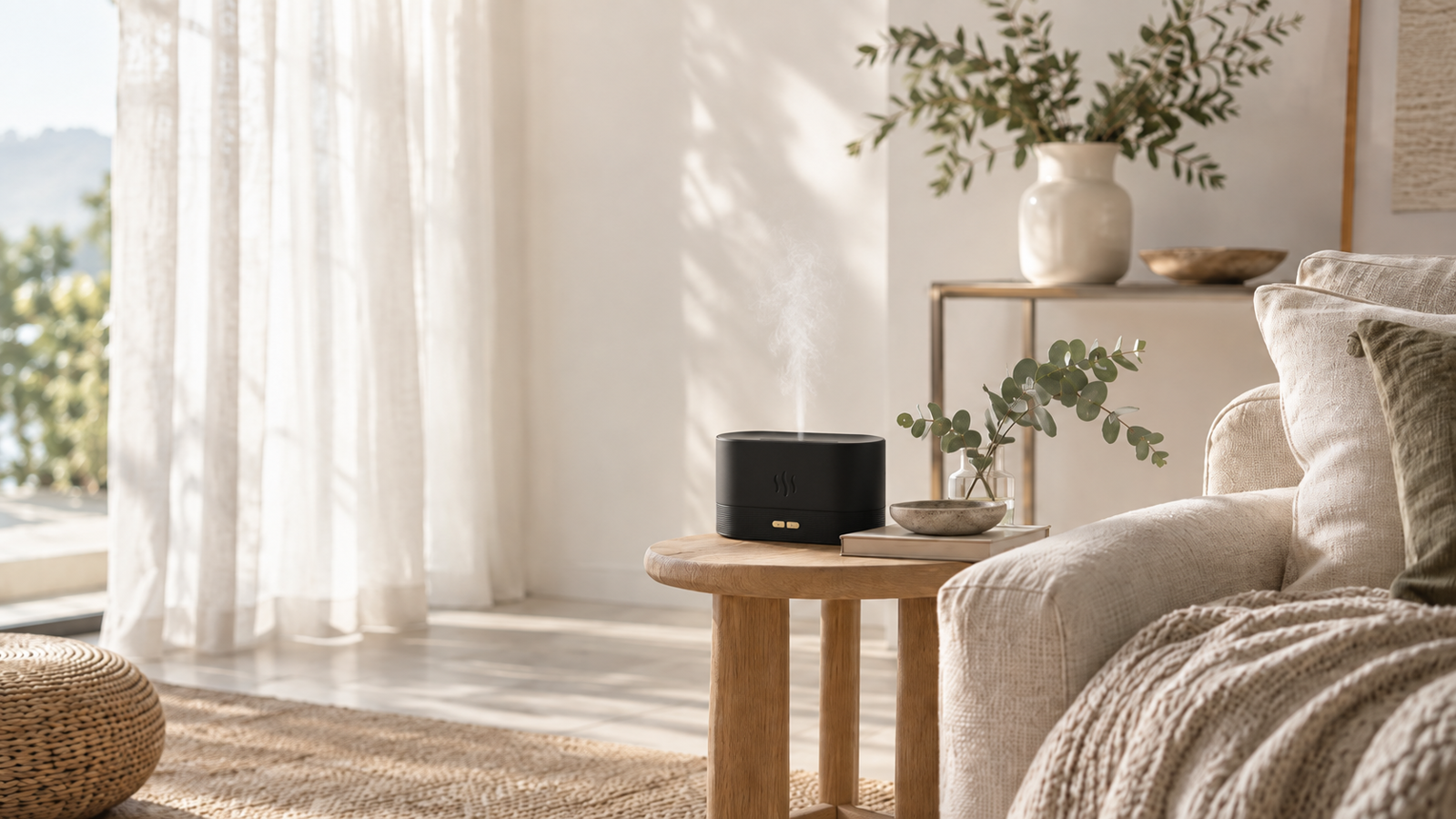
The scent experience is no longer limited to classic incense burners or desktop diffusers. Thanks to portable devices, timer-based systems, mobile apps and solutions designed for large spaces, smart scent systems make it possible to bring fragrance into different areas of daily life in a more controlled and personalizable way.
What Does Technology Mean for the Aromatic Scent Experience?
The technological side of aromatherapy refers to enhancing the devices that release essential oils or aromatic blends into a space with features such as portability, scheduling, intensity control, automation and integration into the room.
The core aim here is not to promise any health outcome, but to offer a more practical experience that carries the user's preferred scent profile into the space for the chosen duration and at the chosen intensity.
How Is Technology Changing the Scent Experience?
In traditional aroma practices, the user operates the device manually and adjusts the scent intensity by the amount of product used. In next-generation systems, options such as timers, auto shut-off, different release modes, app-based control and programmable use come to the fore.
In this respect, smart scent systems turn the scent experience from a matter of product choice alone into a personalizable element of the environment. Users can create different settings according to the size of the space, the time of day and their personal scent preferences.
1. USB-Powered Portable Aroma Diffusers
Running from a computer, adapter or portable power source, USB-powered aroma diffusers are compact devices developed for users looking for a space-saving scent solution at their desk or while traveling.
Some models work with a water tank, while others use pads, cartridges or a dedicated aroma compartment. Since operating time, coverage area and compatibility with aromatic products can vary by model, the manufacturer's instructions should always be reviewed.
These devices may be preferred for creating a controlled scent atmosphere in confined areas such as a desk, a personal corner or a small room.
2. Water-Tank and Ultrasonic Models
An ultrasonic diffuser with a water tank uses high-frequency vibrations to release a mixture of water and a device-compatible aromatic product into the room as a fine mist. These systems do not use an open flame. The way the device works and the recommended amount of product may differ by model.
With ultrasonic models, tank capacity, operating time, auto shut-off, lighting options and the coverage area specified by the manufacturer can be taken into account when making a purchase decision. The tank and the device should also be cleaned regularly in line with the instructions for use.
3. App-Controlled Smart Diffusers
Smart aroma diffusers that pair with a mobile app may allow scent intensity to be adjusted remotely, schedules to be created for specific hours, and the device to be switched on and off.
Some next-generation home fragrance devices let you set up separate operating plans for different days and times. This feature makes it easier to use the scent within set time windows rather than releasing it continuously and without control.
4. Brand-Specific Scent Experiences and Aropromo
Scent can also be used as part of the in-store and event experience. Scent marketing is an experience design approach that aims to pair a brand's visual and auditory communication with a specific scent character.
Point-of-sale systems such as Aropromo are designed to integrate scent diffusion into a billboard, in-store display area or product promotion unit. Because the device can be produced in different sizes, it is easy to adapt to a variety of promotional spaces.
The purpose of this approach is not to deliver a health-related effect to the consumer, but to create a multisensory atmosphere associated with the brand identity.
5. Whole-Space Integrated Scent Systems
Designed to distribute scent across different parts of a home or commercial space rather than from a single desktop device, an ambient scenting system can operate as a standalone unit or, where the infrastructure allows, be integrated into the ventilation system.
In these systems, technical features such as scheduling, intensity level and coverage area come to the fore. Some models work by cold-air diffusion, a method that aims to disperse the aromatic blend as very fine particles without using water.
When choosing a system, check whether the device is compatible only with essential oils or only with the manufacturer's proprietary scent cartridges.
What to Look for When Choosing a Next-Generation Diffuser
Before choosing a device, consider the size of the area where it will be used, how the device operates and its product compatibility. A portable model may be sufficient for a small workspace, while a large space may call for systems with different technical specifications.
Key points to consider include:
- Coverage area and operating time specified by the manufacturer
- Water tank, cartridge or direct oil use
- Timer and auto shut-off options
- Scent intensity control
- Cleaning and maintenance requirements
- Types of aromatic products that can be used
- Manufacturer warnings regarding environments with children and pets
- The noise and light levels the device produces while running
What to Keep in Mind When Using a Technological Diffuser
Essential oils are highly concentrated aromatic products. For this reason, the amount of product to use, the device's tank capacity and the duration of use should be determined according to the product label and device instructions, not by personal guesswork.
Oils, perfumes or blends that are not suitable for the device should not be used. In models with a tank, the water should be replaced regularly, the device should be cleaned as recommended by the manufacturer, and it should be switched off when not in use.
Scent perception can vary from person to person. If there are people in the room who may be bothered by strong scents, a lower intensity should be chosen and the area should be ventilated regularly.
What Does the Future Hold for Scent Technologies?
Applications that could be developed in the future include AI-supported personalization, automatic adjustment based on ambient conditions, programming of different scent profiles and wearable aroma interfaces.
Rather than presenting aromatic products with health claims, these developments focus on managing when, where and at what intensity the scent experience takes place with greater precision.
As systems responsive to personal preferences become more widespread, scent may become a more visible part of home, workspace, retail and event design.
Frequently Asked Questions
What is the difference between a smart diffuser and a classic diffuser?
Classic models are mostly controlled with buttons on the device itself. Smart models may offer additional features such as a mobile app, scheduling, remote control and different intensity programs.
Can a diffuser replace an air purifier?
No. The primary function of a diffuser is to release an aromatic scent into the room. Unless the product has an additional technical feature certified in accordance with the relevant regulations, it should not be regarded as an air purifier.
Can every essential oil be used in a diffuser?
Every device works differently. The product used must comply both with the device manufacturer's instructions and with the usage recommendations on the essential oil's label.
How should scent intensity be determined?
The device and product instructions should be the basis for the recommended starting amount. The recommended amount should not be exceeded in order to achieve a stronger scent.
How long should a diffuser be run?
Operating time can vary depending on the device's technical specifications, the size of the room and the aromatic product used. Rather than setting a general duration, follow the usage instructions on the device and the product.
From the simplest portable devices to whole-space integrated systems, technology is making the aromatic scent experience more programmable and more personal. Smart scent systems should be seen not as tools that promise definite health outcomes, but as experience solutions that bring scent preferences into daily life in a controlled, practical and aesthetic way.
For more information about aromatherapy, essential oils and product use, visit our website at arotolia.com!
Shop The Story

Lavender Mailette Essential Oil 10 ml - FINE LAVANDER CHEMOTYPE MAILETTE


Recent Posts
16 October 2026
Can Virtual Reality and Aromatherapy Come Together?
29 September 2026
What Do Essential Oils Smell Like? Discover Their Scent Profiles